Microfluidic Cell Encapsulation for Directed Evolution of Cellulose-Producing Microorganisms
Directed evolution of material-producing microorganisms is traditionally limited by low-throughput screening and poor genotype-phenotype resolution. Microfluidic cell encapsulation overcomes these barriers by enabling isolation, cultivation, and analysis of individual cells at scale. This case study, based on Laurent, J. M. et al. (PNAS, 2024), presents a droplet-based microfluidic platform for the directed evolution of cellulose-producing bacteria at single-cell resolution.
Using Fluigent pressure-based flow-controllers and RAN Biotechnologies surfactants, researchers generated stable, monodisperse droplets that serve as isolated micro-bioreactors for growth, fluorescence-based cellulose quantification, and high-throughput sorting. This system rapidly identifies improved microbial variants, demonstrating how precise flow control and robust droplet stabilization accelerate strain engineering for sustainable biofabrication.
A paper from ETH Zürich
Paper: Laurent, J. M.; Jain, A.; Kan, A.; Steinacher, M.; Enrriquez Casimiro, N.; Stavrakis, S.; deMello, A. J.; Studart, A. R. Directed Evolution of Material-Producing Microorganisms. Proc. Natl. Acad. Sci. 2024, 121 (31), e2403585121. https://doi.org/10.1073/pnas.2403585121.
This study was conducted at ETH Zürich through a collaboration between the Department of Materials (Complex Materials Group) and the Department of Chemistry and Applied Biosciences (Institute for Chemical and Bioengineering). Led by Prof. André R. Studart and Prof. Andrew J. deMello, the teams combined expertise in microfluidics, self-assembly, and bioengineering to design living materials capable of growth, self-organization, and adaptation inspired by natural biological systems.
The Need for High-Throughput Engineering in Living Material Production
Cellulose as a Target for Biofabrication
Bacterial cellulose is a renewable biopolymer used in tissue engineering, bio-textiles, regenerative medicine, cosmetics, biodegradable packaging, and flexible electronics (Figure 1).1 Its high purity, mechanical strength, and excellent biocompatibility make it a particularly attractive material across these application areas.

Limits of Traditional Engineering Approaches
Natural cellulose production levels are insufficient for industrial-scale applications. Because cellulose biosynthesis relies on interconnected metabolic and regulatory networks, conventional generic engineering strategies, such as promoter modification, gene overexpression, pathway knockouts, or manipulation of c-di-GMP signaling, often have limited impact on improving productivity. 3–6
Improving cellulose-producing microorganisms therefore requires methods capable of single-cell compartmentalization, quantitative phenotype readout, and high-throughput screening of large variant libraries.
Microfluidic cell encapsulation meets these criteria by isolating individual cells in droplets, enabling controlled growth conditions and precise characterization of each variant.1,7
Study Objective: Building a Microfluidic Cell Encapsulation Platform for Rapid Microbial Evolution
The goal of the study was to develop a microfluidic cell encapsulation platform for rapid evolution of cellulose-producing microorganisms by:
- Generating diverse microbial variant libraries and encapsulating single cells while preserving genotype-phenotype linkage
- Providing stable droplet growth conditions for reliable phenotype development
- Quantifying cellulose production through fluorescence-based readouts and enriching high-producing variants using fluorescence-activated droplet sorting (FADS)
This approach establishes a scalable workflow for screening large microbial populations and identifying improved cellulose-producing strains for living-material applications (Figure 2).

Methodology: High-Throughput Microfluidic Cell Encapsulation Workflow
Step 1: Generation of a diverse mutant library
A mutant library of approximately 40,000 variants was created using UV-C mutagenesis to introduce random genomic modifications (Figure 3.A).
Step 2: Single-cell droplet encapsulation
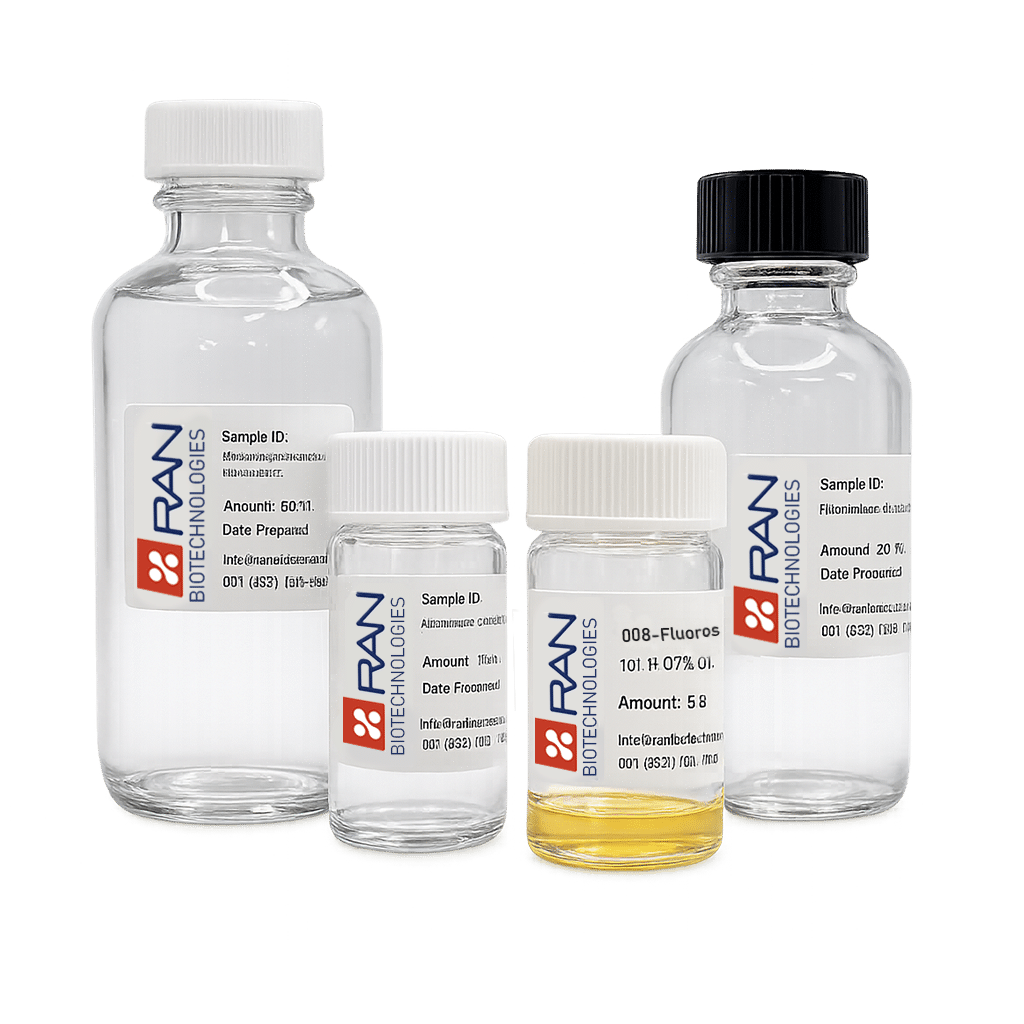
A step-emulsification microfluidic chip was used to generate highly monodisperse droplets, with a Poisson loading parameter of λ ≈ 0.1 cells per droplet (Figure 3.D). Each droplet contained a single Komagataeibacter sucrofermentans cell, a cellulose-inducing growth medium, and a cellulose-binding fluorescent dye. RAN Biotechnologies surfactant ensured reproducible and stable droplets, which is essential for reliable microfluidic cell encapsulation and accurate phenotype detection.

Step 3: Off-chip droplet incubation
Droplets were incubated off-chip in a horizontal monolayer configuration, guaranteeing uniform oxygenation, consistent nutrient exposure, and reproducible cellulose production (Figure 3.F). This setup allowed each variant to express its phenotype independently, without cross-contamination.
Step 4: High-throughput phenotyping using FADS
Following incubation, droplets were reinjected into the sorting device using Fluigent Flow EZTM pressure controller. Precise pressure-driven flow enabled stable reinjection and accurate droplet spacing through the fluorescence detection region.
Droplets exceeding a predefined fluorescence threshold were deflected into a collection outlet using dielectrophoresis (Figure 4). Sorted droplets were broken to recover high-performing strains.

Results: Reliable High-Speed Sorting

Discovery of High-Performance Cellulose Producers Through Ultra-Rare Variant Isolation
Among the 40,000 screened variants, only four mutants consistently produced 50-70% more cellulose than the wild-type strain (Figure 5). These improved strains represented only 0.12% of the total library, showing how the system can reliably isolate very rare but valuable variants.
Identification of a Novel Genetic Determinant of Cellulose Biosynthesis
Whole-genome sequencing revealed that all top-performing strains shared a 12-bp deletion in the clpA gene. This mutation uncovered a previously unrecognized regulatory link between clpA-mediated protein turnover and enhanced cellulose biosynthesis (Figure 6).
Enhanced cellulose production was maintained over multiple culture cycles, confirming the robustness and long-term stability of the evolved strains.

Conclusion
This study demonstrates how a high-throughput microfluidic platform combining step-emulsification, RAN Biotechnologies surfactant stabilization, and Fluigent’s precise pressure-control can accelerate the directed evolution of material-producing microorganisms.
By enabling stable droplet generation, long-term incubation, and reliable high-speed sorting, the platform supports rapid microbial evolution, uncovers new regulatory mechanisms, and facilitates the development of high-performance cellulose-producing strains for living-material applications.
As demand for sustainable and biofabricated materials continues to grow, microfluidic cell encapsulation is emerging as a key enabling technology for engineering the next generation of adaptative, high-performance living materials.
Related Resources
-
Expert Reviews: Basics of Microfluidics 10 Tips for Reliable Droplet Generation Read more
-
Microfluidic Application Notes A quick and efficient double encapsulation method for FACS-based droplet sorting Read more
-
Microfluidics White Papers Double emulsion for the generation of microcapsules – a Review Read more
-
Microfluidics White Papers Droplet-based Microfluidics – A Complete Guide Read more
-
Microfluidics Case Studies The Hebrew University: Encapsulation and culture in 3D hydrogels for Single cell sequencing Read more
-
Microfluidic Application Notes Double Emulsion Generation Read more
-
Microfluidic Application Notes Alginate Microbeads Production Read more
-
Microfluidic Application Notes High-throughput cell DNA screening using digital PCR Read more
Webinar Replay of Interest

Related Solutions


References
(1) Marinho, E. Cellulose: A Comprehensive Review of Its Properties and Applications. Sustain. Chem. Environ. 2025, 11, 100283. https://doi.org/10.1016/j.scenv.2025.100283.
(2) Yekta, R.; Abedi-Firoozjah, R.; Azimi Salim, S.; Khezerlou, A.; Abdolmaleki, K. Application of Cellulose and Cellulose Derivatives in Smart/Intelligent Bio-Based Food Packaging. Cellulose 2023, 30 (16), 9925–9953. https://doi.org/10.1007/s10570-023-05520-1.
(3) Jin, L.-Q.; Jin, W.-R.; Ma, Z.-C.; Shen, Q.; Cai, X.; Liu, Z.-Q.; Zheng, Y.-G. Promoter Engineering Strategies for the Overproduction of Valuable Metabolites in Microbes. Appl. Microbiol. Biotechnol. 2019, 103 (21–22), 8725–8736. https://doi.org/10.1007/s00253-019-10172-y.
(4) Florea, M.; Hagemann, H.; Santosa, G.; Abbott, J.; Micklem, C. N.; Spencer-Milnes, X.; de Arroyo Garcia, L.; Paschou, D.; Lazenbatt, C.; Kong, D.; Chughtai, H.; Jensen, K.; Freemont, P. S.; Kitney, R.; Reeve, B.; Ellis, T. Engineering Control of Bacterial Cellulose Production Using a Genetic Toolkit and a New Cellulose-Producing Strain. Proc. Natl. Acad. Sci. 2016, 113 (24), E3431–E3440. https://doi.org/10.1073/pnas.1522985113.
(5) Desvaux, M.; Guedon, E.; Petitdemange, H. Carbon Flux Distribution and Kinetics of Cellulose Fermentation in Steady-State Continuous Cultures of Clostridium Cellulolyticum on a Chemically Defined Medium. J. Bacteriol. 2001, 183 (1), 119–130. https://doi.org/10.1128/JB.183.1.119-130.2001.
(6) M, M.; T, H.; A, D.; Vs, C.; Át, K. Laboratory Evolution of Microbial Interactions in Bacterial Biofilms. J. Bacteriol. 2016, 198 (19). https://doi.org/10.1128/JB.01018-15.
(7) Dejene, B. K. Natural Nanofibers for Textile Applications: A Review on Electrospinning of Cellulose, Chitin, and Silk for Sustainable Functional Materials. Int. J. Biol. Macromol. 2025, 321, 146597. https://doi.org/10.1016/j.ijbiomac.2025.146597.