hiPSCs-derived Vascular Organ-on-Chip Model Under Unidirectional Controlled Flow
Physiologically relevant Organ-on-Chip and vascular models rely on precise control of perfusion conditions. Stable and well-defined flow direction is essential to reproduce in vivo–like endothelial organization and function over time.
This application note demonstrates how the Omi™ OOC platform enables long-term, unidirectional recirculation, supporting endothelial alignment and polarization in Human iPSC-derived vascular model.
The work was conducted in collaboration with Dr. Dhanesh Kasi, Dr. Hanna Lammertse, and Dr. Valeria Orlova from the Leiden Organ-on-Chip Center and the Orlova group at Leiden University Medical Center.



Importance of Unidirectional Flow in Vascular Organ-on-Chip Models
Vessel-on-Chip (VoC) and other vascularized in vitro models aim to replicate stable vascular physiology, where endothelial cells are continuously exposed to unidirectional shear stress (1). In vivo, this mechanical stimulus is essential for maintaining mature endothelial phenotype.
In contrast:
- Static culture fails to provide mechanical stimulation, resulting in non-aligned, immature endothelial cells. Whereas, rocking platforms, mimics disturbed back and forth flow. These varying flow patterns typically associated with abnormal conditions rather than healthy vasculature.(2)
For hiPSC-derived endothelial cells in particular, flow directionality plays a significant role (3) in:
- Cell elongation and alignment parallel to flow
- Golgi–nucleus polarization
- Barrier integrity and functional maturation
However, implementing unidirectional flow with recirculation using traditional microfluidic systems could often be complex and difficult to maintain over extended periods.
Experimental Workflow and Quantitative Readouts
This application note provides a step-by-step experimental workflow, from cell seeding to quantitative image analysis.
You will find:
- A 5-day unidirectional flow protocol for hiPSC-derived endothelial cells
- Omi™ setup and recirculation workflow
- Comparison of static, bidirectional, and unidirectional flow conditions
- Quantitative analysis of cell alignment and polarization using PolarityJam
- Evidence of stable flow maintenance over prolonged culture
👉 Download the application note to explore the full methodology and results.
Experimental Overview: hiPSC-Derived Endothelial Cells Under Flow
Human iPSCs were differentiated into endothelial cells following established protocols from the Orlova group (4). Cells were seeded into Beonchip Be-Flow microfluidic chips, coated with fibronectin to promote adhesion.
After initial attachment, chips were assigned to one of three conditions:
- Static culture
- Bidirectional flow using a rocking platform
- Unidirectional flow with recirculation using Omi™
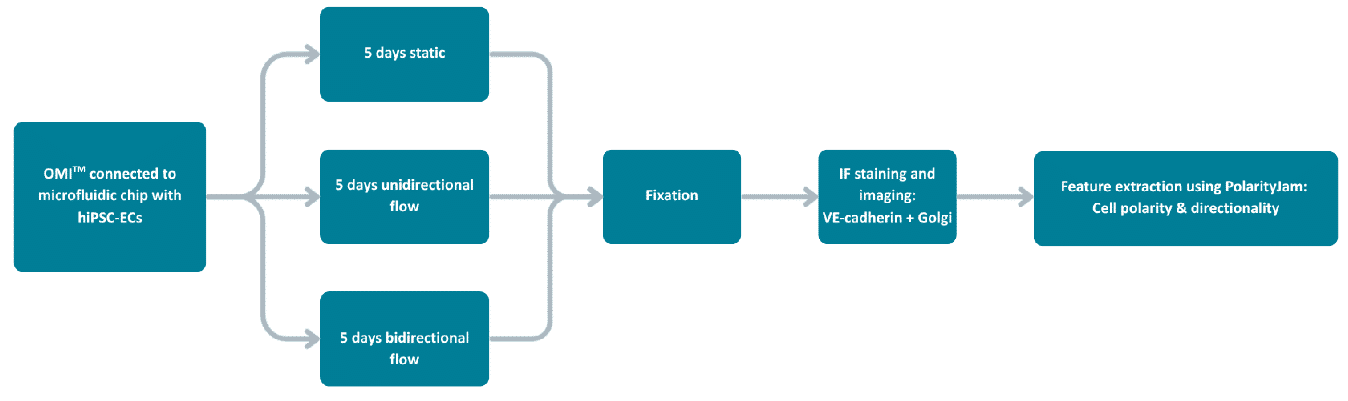
Figure 1 Overview of the Experimental Workflow
For Omi™ experiments, an automated protocol guided users through device calibration and connection of the organ-on-chip model. Flow rates were gradually increased over the course of the experiment to facilitate endothelial adaptation, alignment, and maturation, ultimately reaching a maximum shear stress of 0.912 dyn/cm².
Results: Stable Unidirectional Flow Drives hiPSC-derived Endothelial Cells Alignment and Polarization
Omi™ maintained the preconfigured unidirectional flow profiles over a continuous 5-day culture period. The recirculation functionality enabled continuous perfusion without the need for additional medium replenishment, thereby minimizing experimental variability and reducing medium consumption.
Under unidirectional shear stress, hiPSC-derived endothelial cells (hiPSC-ECs) underwent pronounced morphological and organizational changes characteristic of a mature endothelial phenotype. Immunofluorescence imaging revealed strong elongation and alignment of hiPSC-ECs parallel to the direction of flow, whereas cells cultured under static conditions or subjected to bidirectional flow on a rocking platform retained a morphology with random orientation (Figure 2).
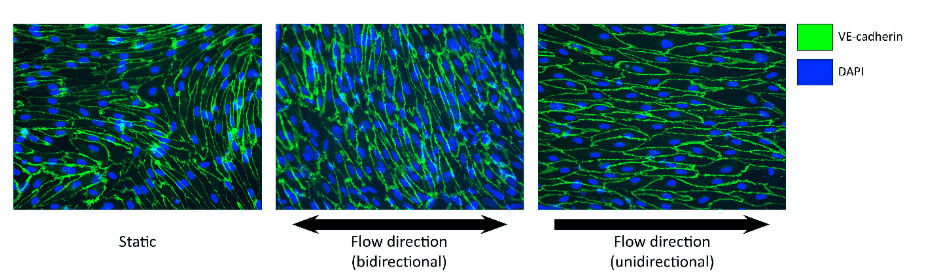
Beyond changes in cell morphology, unidirectional flow induced collective polarization of the Golgi–nucleus axis, a well-established hallmark of endothelial mechanosensing and functional maturation (5). Under unidirectional shear, the Golgi apparatus consistently localized upstream of the nucleus, oriented opposite to the direction of flow, reflecting coordinated planar cell polarity across the endothelial monolayer. This polarization is mechanistically linked to shear-mediated cytoskeletal remodeling and spatial organization of signaling pathways involved in junction stabilization, barrier function, and anti-inflammatory endothelial states (6).
In contrast, hiPSC-derived endothelial cells maintained under static or bidirectional flow conditions showed no preferential Golgi–nucleus orientation, indicating a failure to establish sustained polarity. Quantitative analysis using PolarityJam (7) confirmed significantly higher alignment and polarity indices under unidirectional flow compared to both control conditions. Notably, bidirectional flow—despite generating shear stress—did not induce polarization, underscoring that flow directionality, rather than shear magnitude alone, is a decisive determinant of endothelial organization and phenotype in hiPSC-derived Vascular Organ-on-Chip Model.
Full analysed data and methods are provided in the complete application note.
Omi™: Simplifying Unidirectional Flow with Recirculation
Omi™ is a compact, automated Organ-on-Chip perfusion platform designed to remove technical barriers associated with long-term microfluidic experiments.
In this application note, Omi™ was used to:
- Deliver continuous, unidirectional flow
- Maintain stable flow profiles over five days
- Enable recirculation of a small culture medium volume
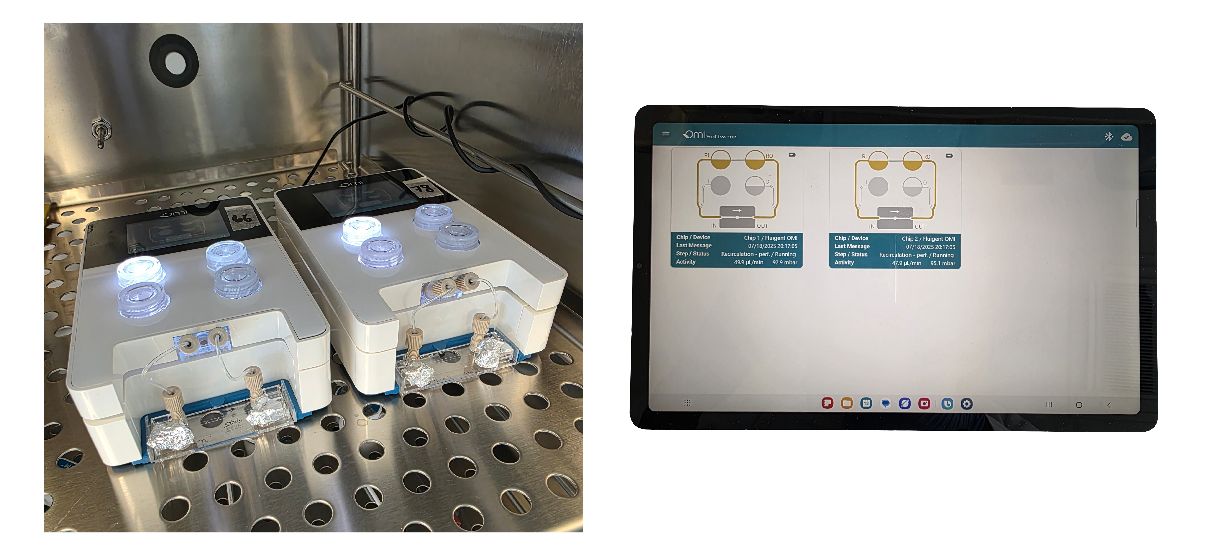
Unlike rocking platforms, Omi™ maintains a constant flow direction, while automated recirculation minimizes medium consumption and manual intervention.
Up to 12 Omi™ units can be controlled simultaneously via an intuitive tablet interface, allowing easy configuration of flow rates and profiles.
Read further to understand how Omi functions:
Conclusion
This application note demonstrates how the Omi™ platform can be configured for long-term, low-volume recirculating perfusion in physiologically relevant vessel-on-chip experiments. It details the flow rates, shear stress conditions, and automated protocols used to establish and maintain unidirectional flow in hiPSC-derived vascular ooac models, as well as the resulting endothelial alignment and Golgi–nucleus polarization readouts. Practical guidance is also provided to support the implementation of unidirectional flow in custom Organ-on-Chip setups.
Fluigent Author: Anel Rakhmatullina
Related Solutions


Related Expertises
-
Expert Reviews: Basics of Microfluidics The Importance of Recirculation in Microfluidic Systems: Principles and Applications Read more
-
Expert Reviews: Basics of Microfluidics 5 Key Tips for Starting Organ-on-Chip Models Read more
-
Microfluidic Application Notes Liver–Kidney Organ-On-Chip Model using the Omi™ Dual Platform Read more
-
Microfluidics Case Studies Gut-on-Chip Modeling: From Chip Development to Perfusion Read more
-
Expert Reviews: Basics of Microfluidics Optimizing Microfluidic Perfusion: Best Practices and Innovations Read more
-
Microfluidic Application Notes Controlling Flow Rate and Shear Stress with Omi™ to Study Endothelial Cell Response Read more
-
Microfluidic Application Notes Gut-on-Chip Model Development Using OOAC Platform, Omi Read more
-
Microfluidics Case Studies Creating kidney organoids‑vasculature interaction model using Fluigent’s Flow-EZ Read more
-
Microfluidics White Papers A review of Organ on Chip Technology – A White Paper Read more
-
Expert Reviews: Basics of Microfluidics Why Control Shear Stress in Cell Biology? Read more
Related Webinars


Acknowledgements
The work in Leiden OoC Center and Dr. Orlova is supported by the Novo Nordisk Foundation Center for Stem Cell Medicine that is supported by a Novo Nordisk Foundation grant (NNF21CC0073729) and the LymphChip project with project number NWA-ORC 2019 1292.19.019 of the NWA research program ‘‘Research on Routes by Consortia (ORC),’’ which is funded by the Netherlands Organisation for Scientific Research (NWO).
References
1. Ingber DE. Human organs-on-chips for disease modelling, drug development and personalized medicine. Nat Rev Genet. 2022 Aug;23(8):467–91.
2. Shakeri A, Wang Y, Zhao Y, Landau S, Perera K, Lee J, et al. Engineering Organ-on-a-Chip Systems for Vascular Diseases. Arterioscler Thromb Vasc Biol. 2023 Dec;43(12):2241–55.
3. Jang S, Collin de l’Hortet A, Soto-Gutierrez A. Induced Pluripotent Stem Cell-Derived Endothelial Cells: Overview, Current Advances, Applications, and Future Directions. Am J Pathol. 2019 Mar;189(3):502–12.
4. Orlova VV, van den Hil FE, Petrus-Reurer S, Drabsch Y, Ten Dijke P, Mummery CL. Generation, expansion and functional analysis of endothelial cells and pericytes derived from human pluripotent stem cells. Nat Protoc. 2014;9(6):1514–31.
5. Tkachenko E, Gutierrez E, Saikin SK, Fogelstrand P, Kim C, Groisman A, et al. The nucleus of endothelial cell as a sensor of blood flow direction. Biol Open. 2013 Aug 14;2(10):1007–12.
6. Dorland YL, Huveneers S. Cell-cell junctional mechanotransduction in endothelial remodeling. Cell Mol Life Sci CMLS. 2017 Jan;74(2):279–92.
7. Giese W, Albrecht JP, Oppenheim O, Akmeriç EB, Kraxner J, Schmidt D, et al. Polarity-JaM: an image analysis toolbox for cell polarity, junction and morphology quantification. Nat Commun. 2025 Feb 8;16(1):1474.