Automated Microfluidic Electrochemistry for Sustainable Cyclohexanol Oxidation
This case study uses microfluidic electrochemistry to investigate cyclohexanol electrooxidation for sustainable chemical production. An automated microfluidic platform, driven by the Flow EZ pressure controller and operated through the Fluigent SDK, enabled precise and reproducible control of flow and reaction conditions.
The system allowed systematic screening of electrolytes and additives, providing mechanistic insights and improved current densities. This approach demonstrates a versatile tool for accelerating sustainable electrosynthesis.
A Paper from Imperial College London
Paper: Liang, X.; Ouyang, M.; Brandon, N. P.; Xuan, J.; Wang, H. Automated Microfluidics for Efficient Characterization of Cyclohexanol Electrooxidation for Sustainable Chemical Production. JACS Au 2025, 5 (3), 1340–1349.
This study was conducted by Dr. Huizhi Wang’s lab at Imperial College London. Dr. Wang is an Associate Professor in Electrochemical Engineering and a member of the Electrochemical Science & Engineering Group. Her research focuses on electrochemical energy systems, including fuel cells, batteries, and electrolysers, with emphasis on thermofluid processes, microfluidic fabrication, and diagnostic techniques.
Can Microfluidic Electrochemistry Improve Power-to-Chemicals Research?
Power-to-chemicals processes, which convert renewable electricity into value-added products, are attracting attention as a route to decarbonize the chemical industry.1–3 A representative example is the electrooxidation of cyclohexanol to cyclohexanone, an important precursor for nylon and fine chemicals.4,5 Compared with conventional oxidation methods, electrochemical routes can operate under milder conditions, improve selectivity, and enable the co-production of hydrogen.4,6
However, the reaction mechanisms and limiting factors remain poorly understood. Reported performances vary widely due to differences in reactor designs, which affect mass transport and reaction environments. In addition, the large number of variables, such as electrode materials, electrolytes, additives, and flow conditions, makes systematic studies slow and labor-intensive.7,8
These challenges highlight the need for automated and reproducible experimental platforms, where microfluidic electrochemistry offers a promising solution (Figure 1).9

Figure 1: Cyclohexanol electrooxidation using a microfluidic approach (reference from [1] Liang, X. et al. JACS Au 2025, 5 (3), 1340–1349).
Aim of the Study
In this paper, X. Liang et al. developed an automated microfluidic electrochemistry platform for the precise and reproducible investigation of cyclohexanol electrooxidation. Operating at the microscale allows accurate control over flow, mass transport, and reaction conditions, enabling systematic and reliable measurements.
The platform integrates key functions such as electrolyte preparation, reaction control, and characterization into a single automated system (Figure 2). This setup allows efficient screening of operating conditions and surfactant additives, provides mechanistic insights on nickel electrodes, and offers a transferable approach for studying other power-to-chemicals processes.
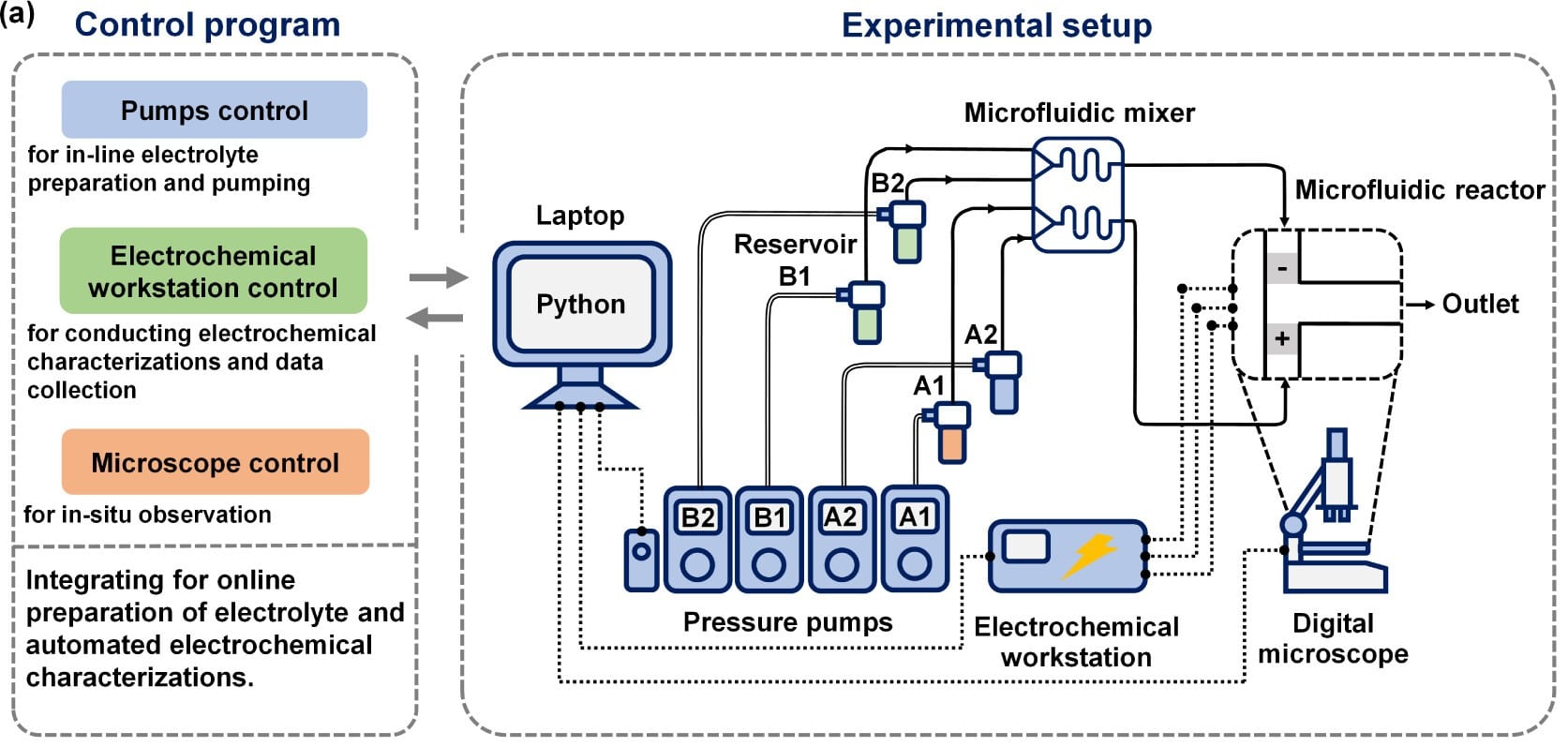
Figure 2: Microfluidic experimental platform and automation design (reference from [1]).
How to Set Up an Automated Microfluidic Electrochemistry Platform
The microfluidic platform consisted of a 3D-printed micromixer and a T-shaped counterflow electrochemical reactor for inline electrolyte preparation and cyclohexanol electrooxidation measurements (Figure 2). Nickel and platinum electrodes were integrated in a coplanar configuration with an Ag/AgCl reference, and an observation window allowed in-operando microscopy. Laminar flow of anolyte and catholyte streams minimized cross-contamination, ensuring accurate and reproducible measurements.
Four Fluigent FlowEZ pressure pumps delivered anolyte and catholyte from airtight reservoirs to the micromixer and reactor, providing stable, pulseless flow for long-term experiments (Figure 3). A Python program coordinated the pumps, electrochemical workstation, and digital microscope, enabling automated control of concentrations, flow rates, and multistep measurements (Figure 4). Each experiment followed a three-stage procedure: stabilizing flow and electrolyte composition, acquiring electrochemical data, and removing hydrogen bubbles with a brief high-flow flush, ensuring reproducible operation.

Figure 3: Electrochemical microfluidic devices for cyclohexanol electrooxidation. (a) 3D-printed micromixer with reactor; flow paths indicated. (b) Micromixer (b1) and reactor (b2) structures. (c) T-shaped counter-flow reactor schematic (reference from [1]).

Figure 4: Excerpt from the Python code used for pressure pump control (reference from [1]).
Cyclic voltammetry (CV) and linear sweep voltammetry (LSV) were performed at ambient temperature (25 ± 1°C) over 0.20–0.54 V vs Ag/AgCl with scan rates from 2–200 mV/s. Nickel electrodes were pretreated in situ with 0.5 mol/L NaOH to form a stable β-Ni(OH)₂ layer, providing the Ni²⁺/Ni³⁺ redox couple for cyclohexanol oxidation.
Microfluidic Proof of Concept: Mechanistic Study and Additive Screening
Using the automated platform, the authors investigated the electrooxidation of cyclohexanol on nickel electrodes in alkaline media. The reaction follows an indirect pathway in which Ni(OH)₂ is electrochemically converted to NiOOH, which then chemically oxidizes adsorbed cyclohexanol to cyclohexanone before being regenerated. Electrochemical measurements showed a strong increase in oxidation currents in the presence of cyclohexanol, confirming the catalytic role of the Ni(OH)₂/NiOOH redox couple. Systematic variations in scan rate, concentration, and flow conditions revealed that the surface chemical reaction between adsorbed cyclohexanol and NiOOH is slower than charge transfer and mass transport, identifying it as the rate-determining step.
This microfluidic electrochemistry approach provides precise control over flow, concentration, and interfacial transport, while maintaining separated laminar streams for the anolyte and catholyte. The resulting stable and reproducible conditions enable accurate kinetic analysis, reduced reagent consumption, and automated screening of operating parameters (Figure 5).

The platform was further used to evaluate the effect of surfactant additives. All tested surfactants increased the oxidation current, with a nonionic surfactant showing the strongest improvement. The results indicate that ionic and nonionic surfactants enhance performance through different interfacial mechanisms, demonstrating the system’s capability for rapid and systematic additive screening.
Conclusion
An automated microfluidic electrochemistry platform was developed for the controlled and efficient study of cyclohexanol electrooxidation, a promising route for sustainable chemical production. The system enabled automated electrolyte preparation, precise reaction control, and real-time electrochemical measurements, leading to the confirmation of the reaction mechanism and identification of the rate-determining step. It also allowed rapid and systematic screening of surfactant additives.
Stable, pulseless flow was provided by FlowEZ pressure controllers, while the Fluigent SDK enabled Python-based automation of the entire workflow, offering a reproducible and transferable solution for electrosynthesis research.
Read the full paper: Liang, X.; Ouyang, M.; Brandon, N. P.; Xuan, J.; Wang, H. Automated Microfluidics for Efficient Characterization of Cyclohexanol Electrooxidation for Sustainable Chemical Production. JACS Au 2025, 5 (3), 1340–1349. https://doi.org/10.1021/jacsau.4c01207.
Fluigent Author: Joseph Farah
Discover our range of flow control instruments


Expertises & Resources
-
Expert Reviews: Basics of Microfluidics Automation in Microfluidics: Real-Time Monitoring and Feedback Loops Read more
-
Microfluidics Case Studies Real-Time Monitoring Platform for Ocular Drug Delivery, Integrating Fluigent’s Flow EZ Read more
-
Microfluidics Case Studies Success story of SEED Biosciences: Single cell impedance analysis Read more
-
Microfluidics Case Studies CEA/CNRS: A flow cell for nanoscopic imaging in liquid Read more
-
Expert Reviews: Basics of Microfluidics Flow Control Technologies: Comparison between peristaltic, syringe and pressure pumps for microfluidic applications Read more
References
(1) Liang, X.; Ouyang, M.; Brandon, N. P.; Xuan, J.; Wang, H. Automated Microfluidics for Efficient Characterization of Cyclohexanol Electrooxidation for Sustainable Chemical Production. JACS Au 2025, 5 (3), 1340–1349. https://doi.org/10.1021/jacsau.4c01207.
(2) Barton, J. L. Electrification of the Chemical Industry. Science 2020, 368 (6496), 1181–1182. https://doi.org/10.1126/science.abb8061.
(3) Daiyan, R.; MacGill, I.; Amal, R. Opportunities and Challenges for Renewable Power-to-X. ACS Energy Lett. 2020, 5 (12), 3843–3847. https://doi.org/10.1021/acsenergylett.0c02249.
(4) Jia, Y.; Chen, Z.; Gao, B.; Liu, Z.; Yan, T.; Gui, Z.; Liao, X.; Zhang, W.; Gao, Q.; Zhang, Y.; Xu, X.; Tang, Y. Directional Electrosynthesis of Adipic Acid and Cyclohexanone by Controlling the Active Sites on NiOOH. J. Am. Chem. Soc. 2024, 146 (2), 1282–1293. https://doi.org/10.1021/jacs.3c05898.
(5) Wang, R.; Kang, Y.; Wu, J.; Jiang, T.; Wang, Y.; Gu, L.; Li, Y.; Yang, X.; Liu, Z.; Gong, M. Electrifying Adipic Acid Production: Copper‐Promoted Oxidation and C−C Cleavage of Cyclohexanol. Angewandte Chemie 2022, 134 (50), e202214977. https://doi.org/10.1002/ange.202214977.
(6) Liu, F.; Gao, X.; Shi, R.; Xiong, J.; Guo, Z.; Tse, E. C. M.; Chen, Y. Graphdiyne as an Electron Modifier for Boosting Electrochemical Production of Adipic Acid. Adv Funct Materials 2024, 34 (6), 2310274. https://doi.org/10.1002/adfm.202310274.
(7) Ghosh, S.; Bagchi, D.; Mondal, I.; Sontheimer, T.; Jagadeesh, R. V.; Menezes, Prashanth. W. Deciphering the Role of Nickel in Electrochemical Organic Oxidation Reactions. Advanced Energy Materials 2024, 14 (22), 2400696. https://doi.org/10.1002/aenm.202400696.
(8) Cornejo, O. M.; Murrieta, M. F.; Castañeda, L. F.; Nava, J. L. Characterization of the Reaction Environment in Flow Reactors Fitted with BDD Electrodes for Use in Electrochemical Advanced Oxidation Processes: A Critical Review. Electrochimica Acta 2020, 331, 135373.
(9) Ibrahim, O. A.; Navarro-Segarra, M.; Sadeghi, P.; Sabaté, N.; Esquivel, J. P.; Kjeang, E. Microfluidics for Electrochemical Energy Conversion. Chem. Rev. 2022, 122 (7), 7236–7266. https://doi.org/10.1021/acs.chemrev.1c00499.